Policy

ATA Policy Update: Telehealth Permanency, Interstate Licensure, and AI at a National Inflection Point

ATA Policy Update

The ATA’s policy update outlines accelerating momentum in telehealth and AI, highlighting federal extensions of Medicare telehealth flexibilities through 2027, continued interstate licensure progress, and emerging state regulations affecting remote patient monitoring and AI in mental health care. It emphasizes that healthcare is at a pivotal moment as AI tools and virtual‑first models expand, while regulatory frameworks remain in flux. The next two years will be critical for generating strong evidence to secure permanent telehealth reforms and ensure safe, scalable, and patient‑centered digital care.

Advancing Digital Transformation in Telehealth: From AI to Interoperability

Advancing Digital Transformation in Telehealth

The Digital Transformation SIG meeting emphasized shifting from high‑level digital health concepts to practical, evidence‑driven implementation, highlighting key priorities such as workflow integration, EMR and data interoperability, real‑world AI use cases, and the need to address infrastructure and equity gaps to support scalable telehealth and virtual care innovation.

Summary of 2026 Telehealth & RTM Policy Updates

swtrc

The 2026 policy landscape signals a shift toward "tele-permanence" with the bipartisan FY26 funding package extending Medicare telehealth flexibilities through 2027 and the Hospital-at-Home program through 2030. Key updates include the permanent status of most telehealth codes and more flexible Remote Therapeutic Monitoring (RTM) options, such as new device supply codes for shorter 2–15 day collection periods and a 10–19 minute treatment management code. With FQHC/RHC billing via G2025 extended through 2026 and expanded support for behavioral health, CMS is establishing virtual care as a cornerstone of high-quality rehabilitation.

Telehealth Innovations in Rural Health: How AZ, CO, NM, and NV Are Transforming Access Through the CMS Rural Health Transformation Program

CMS RHTI Program Lead Image

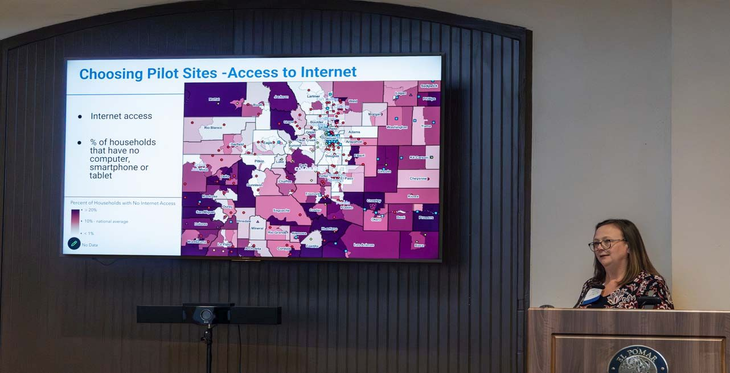
In January 2026, as rural healthcare continues to face challenges like geographic isolation, provider shortages, and limited infrastructure, the Centers for Medicare & Medicaid Services (CMS) Rural Health Transformation (RHT) Program stands out as a pivotal initiative. This $50 billion effort awards funds to all 50 states to bolster rural health systems, with a strong emphasis on innovative capabilities like telemedicine and telehealth.

SEARCH 2026: Advancing the Future of Telehealth Research

SEARCH Logo

The landscape of healthcare delivery has been transformed by digital innovation, and as we move further into the connected health era, the need for rigorous research and meaningful dissemination has never been more critical. The Society for Education and the Advancement of Research in Connected Health (SEARCH) will be holding SEARCH 2026 – The National Telehealth Research Symposium, June 2-3, 2026, in Chapel Hill, North Carolina. It will showcase connected health efforts, strategies, and partnerships, specifically those that focus on the research of telemedicine, telehealth, eHealth, mHealth, and other healthcare technologies.

DEA’s Proposed Telemedicine Rule: What It May Mean for Prescribing Controlled Substances via Telehealth

Policy Image

On January 17, 2025, the Drug Enforcement Administration (DEA) proposed a new telemedicine regulation, entitled Special Registrations for Telemedicine and Limited State Telemedicine Registrations, that impact healthcare practitioners, telemedicine platforms, and patients. Key elements of the proposed rule include the introduction of a three-tiered special registration system, new state registration requirements for prescribing controlled substances, increased reporting and recordkeeping obligations, and updated controls on Schedule II substances. This proposed rule, once finalized and effective, will require that providers practicing via telemedicine and telemedicine platforms update their workflows accordingly.

The Quest to Measure and Compare Telehealth Utilization and Changes Across US Hospitals

Lead

Telehealth measurement has recently received renewed attention as healthcare organizations rapidly adopted and deployed telehealth programs during the COVID-19 pandemic. Since the pandemic started, the need to measure utilization and its temporal variations accurately has increased as the rate and type of telehealth visits grew substantially and is now stabilizing. Measures that interact with utilization, like cost, have also not been effectively quantified to understand the financial impact of telehealth utilization variation during and since the pandemic and are only recently being rigorously assessed. This may be due to challenges accessing complete, reliable data, especially at the organizational level. As health services researchers who conduct evaluations in various areas of telehealth, these limitations restrict how health services researchers, who conduct evaluations in various areas of telehealth, define and measure telehealth among hospitals to inform accurate comparisons of utilization and care provision via telehealth.

Age-inclusive Telehealth: What is it? How can we achieve it?

Lead

As a geriatrician, I serve as a primary care physician for older adults. In my practice, there are patients across the continuum of medical complexity with all levels of physical and cognitive functioning. A universal theme I see in practice is that it’s hard to keep up with health, healthcare, and health insurance plans. It can be challenging for my patients to come into the office for an in-person visit. They may have to drive a long distance, their medical appointment may interfere with their routine, such as a weekly exercise class, or if they have limited mobility, leaving the house is a feat and getting into the clinic can be quite burdensome. 

AI's impact on healthcare and telemedicine

Lead

The current and future potential impact of Artificial Intelligence (AI) on healthcare, particularly in relation to telemedicine, is huge. Presented here are just a few of the more exciting technologies and their potential for use and impact in telehealth applications.

With ambient clinical listening technologies (AI-based scribes), advanced, voice-enabled AI tools automatically document patient encounters and free-flowing conversation between physicians, patients, and families. An advantage of using AI scribes in a telemedicine setting is that providers can focus more continuously on their consultation with the patient, eliminating the need to divert their attention away from the patient for note taking. Using AI scribes can save providers significant amounts of time as the burden to create accurate notes or encounter summaries in the electronic health record is reduced as it can be done automatically with minimal editing. Some AI scribe products also include predictive tools that can analyze the conversations, provide feedback, and assist with order placement, future appointment scheduling, or prescriptions, which can help reduce provider burnout, save time, and help ensure that all topics discussed are properly coordinated.

2024 Medicare telehealth billing and reimbursement updates with Carol Yarbrough

Lead

In the ever-evolving landscape of Medicare coverage, the 2024 Medicare Physician Fee Schedule (MPFS) brings crucial updates to telehealth billing and reimbursement.

During a recent Southwest Telehealth Resource Center webinar presentation, “`Tis The Season: For The 2024 MPFS Telehealth Billing & Reimbursement Updates,” Carol Yarbrough, MBA, CCA, CPC, OCS, CHC, a healthcare compliance and reimbursement specialist, discussed the intricacies of the 2024 MPFS changes affecting telehealth along with their impact on providers and patients alike.